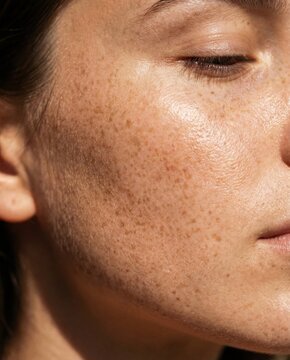

The visible signs of facial aging—lines, hollowing, sagging, a shift in overall proportion—are easy to notice. What is less obvious is the sequence of structural changes that produce them. Most patients focus on the symptom: a specific line, a shadow, a loss of firmness. The physician’s role is to understand the cause, which is almost always a combination of changes happening simultaneously at different depths—in the skin, in the fat compartments, in the muscles, and in the bone.
This understanding changes everything about how aesthetic treatment is planned. Treating a symptom without accounting for its underlying cause is one of the most common reasons aesthetic results look unnatural or fail to satisfy. Understanding what is actually happening to your face over time is the most useful foundation for any conversation with an aesthetic physician.
How Face Ages Over Time: What Aesthetic Medicine Reveals About Structural Change
The skin itself: collagen, elastin, and hydration
The most immediate layer of change is the skin. From the mid-twenties onward, collagen production begins to decline at a rate of approximately one percent per year. Elastin—the protein that allows skin to snap back into place after being stretched—also diminishes, and the natural hyaluronic acid content of the dermis decreases steadily. The result is skin that becomes progressively thinner, less elastic, and less capable of retaining moisture.
Surface-level changes—fine lines, a loss of luminosity, textural irregularities—are the earliest visible expression of these processes. They are also the ones most responsive to skin-quality treatments: collagen-stimulating procedures, hydrating micro-injections, and resurfacing techniques that accelerate cellular turnover.
The fat compartments: loss, descent, and redistribution
The face is divided into distinct fat compartments that provide its characteristic fullness and youthful contours. These compartments do not age uniformly. Some deflate earlier than others—the temples and the area beneath the eyes tend to hollow first, creating a gaunt or tired appearance that has nothing to do with muscle movement or skin texture. The cheeks follow, losing the forward projection that defines a youthful midface.
At the same time, some fat compartments descend due to the gradual relaxation of the retaining ligaments that hold them in place. This descent creates what patients often describe as jowling along the jawline, deepening of the nasolabial folds, and a general heaviness in the lower face that was not present before. The face does not simply sag—it redistributes, and that redistribution has a particular pattern that an experienced physician will recognize immediately.
Volume restoration through hyaluronic acid fillers and collagen biostimulators addresses these changes by targeting the specific compartments where loss or descent has occurred, restoring the proportions of the face rather than simply filling lines.
The muscles: dynamic lines and changing tone
Facial muscles are responsible for expression—and, over time, for the lines that repeated expression creates. Crow’s feet, forehead lines, and the vertical creases between the brows develop because the skin above an active muscle is folded and unfolded thousands of times each day, every day, for decades. When collagen and elastin are abundant, these folds recover fully. As they decline, the fold becomes increasingly permanent.
Neuromodulators—injectable treatments that temporarily reduce muscle activity—address this mechanism directly. Used conservatively and early, they prevent the deepening of dynamic lines. Used later, they soften what is already there. The muscle itself does not change; what changes is the degree to which its movement is expressed in the overlying skin.
The bone: the foundation that shifts over time
This is the layer of aging that is least discussed with patients and most underestimated in its impact. The facial skeleton is not static. Bone resorption—the gradual loss of bone density and volume—occurs in predictable patterns across the face, beginning as early as the late thirties and accelerating over time. The orbital rim (the bone surrounding the eye) recedes, enlarging the appearance of the eye socket and contributing to the hollowing of the under-eye area. The midface bones lose forward projection. The jaw and chin can lose definition.
These skeletal changes alter the scaffolding on which all the softer tissues rest. A physician who understands bone resorption can place volume in locations that restore structural support at the deepest level—producing results that look more natural and that last longer than surface-only treatment.
Why no single treatment addresses all of this
Facial aging is a multidimensional process, and the most effective approach to it is a multidimensional plan. Different treatments address different layers: skin-quality procedures improve the dermis; neuromodulators manage dynamic muscle activity; fillers and biostimulators restore or stimulate volume; and structural assessments inform how all of these are combined and sequenced.
The consultation is where this assessment happens. A physician who evaluates the face as a whole—rather than responding only to what the patient points to—is the one most likely to develop a plan that produces a genuinely natural, proportionate, and lasting result.
Understanding how your face is changing, and why, is the foundation of a thoughtful aesthetic conversation. At Redna Aesthetics in Puerto Vallarta, every treatment plan begins with exactly that conversation—conducted in English, in a private setting, with no pressure and no rush. Visit rednaaesthetics.com to schedule your consultation.