Of all the injectable treatments available in aesthetic medicine, hyaluronic acid dermal fillers are the ones most patients encounter first. They are the most widely used, the most extensively studied, and—in the hands of a skilled physician—among the most versatile. A well-placed filler can restore volume that has diminished with age, refine facial proportions, and improve areas where the skin has lost structural support from the underlying tissue. The result, when done conservatively, does not look like an addition. It looks like a restoration.
They are also reversible—and that matters considerably when considering a treatment for the first time.
Dermal Fillers for the Face: How Hyaluronic Acid Works, Where It Goes, and How Long It Lasts
What is hyaluronic acid and why is it used as a filler?
Hyaluronic acid is a naturally occurring molecule found throughout the human body, with the highest concentrations in the skin, joints, and eyes. In the skin, it acts as a hydration regulator—binding water to the tissue and contributing to the plump, resilient quality characteristic of younger skin. As the body ages, natural hyaluronic acid production declines, and the skin progressively loses volume, moisture, and elasticity.
The hyaluronic acid used in dermal fillers is a lab-produced, cross-linked form of the molecule, engineered to hold its structure within the tissue for months before being gradually broken down by the body’s own enzymes. Because it is chemically similar to a substance the body already produces, it is well tolerated by most patients and carries a low risk of allergic reaction.
Which areas of the face can be treated?
Dermal fillers can be applied across a wide range of facial areas, each requiring different product formulations, viscosities, and injection techniques. The most commonly treated sites include the cheeks and mid-face, where volume loss creates a flattening of contours and the descent of facial fat; the nasolabial folds, the lines running from the sides of the nose toward the corners of the mouth; the lips, for definition, symmetry, and hydration; the chin and jawline, for structural refinement and improved facial balance; and the tear trough, the concave area beneath the eye that creates shadowing when hollowed.
Not all products are interchangeable across these areas. A physician selects the appropriate density and formulation for each injection site based on the tissue depth, the desired outcome, and the patient’s existing anatomy.
What results can you realistically expect?
Results from hyaluronic acid fillers are visible immediately following treatment, though mild swelling in the first 48 to 72 hours may temporarily make the treated area appear slightly more augmented than the final result. The full, settled outcome is typically visible at two to four weeks. A well-planned and well-executed filler treatment should look like a natural improvement—a restoration of what was there rather than something added.
The degree of change depends directly on the amount of product used and the specific area. Conservative treatment, as practiced in medically rigorous aesthetic clinics, uses the minimum amount needed to achieve the patient’s goal, leaving room to add more if indicated at a follow-up appointment.
How long do dermal fillers last?
Duration varies by area, product, and the individual patient’s metabolism. In areas with frequent and significant muscle movement—the lips being the primary example—hyaluronic acid fillers tend to be metabolized faster, typically lasting between six and twelve months. In areas with less mobility, such as the cheeks, temples, or chin, the same product may last twelve to eighteen months. Your physician will give you a realistic estimate for your specific treatment plan during the consultation.
| Area | Typical Duration |
|---|---|
| Lips | 6–12 months |
| Nasolabial folds | 9–14 months |
| Cheeks / mid-face | 12–18 months |
| Temples | 12–18 months |
| Under-eye (tear trough) | 12–18 months |
| Chin / jawline | 12–18 months |
Is the treatment reversible?
Yes. Hyaluronic acid fillers can be dissolved using an enzyme called hyaluronidase, which breaks down the cross-linked hyaluronic acid and allows the tissue to return largely to its pre-treatment state. Dissolution is typically accomplished in a single appointment. This reversibility is one of the primary reasons hyaluronic acid fillers are the preferred starting point for patients who are new to injectable treatments—it provides a meaningful safety margin that other types of injectables do not offer.
What a filler appointment involves
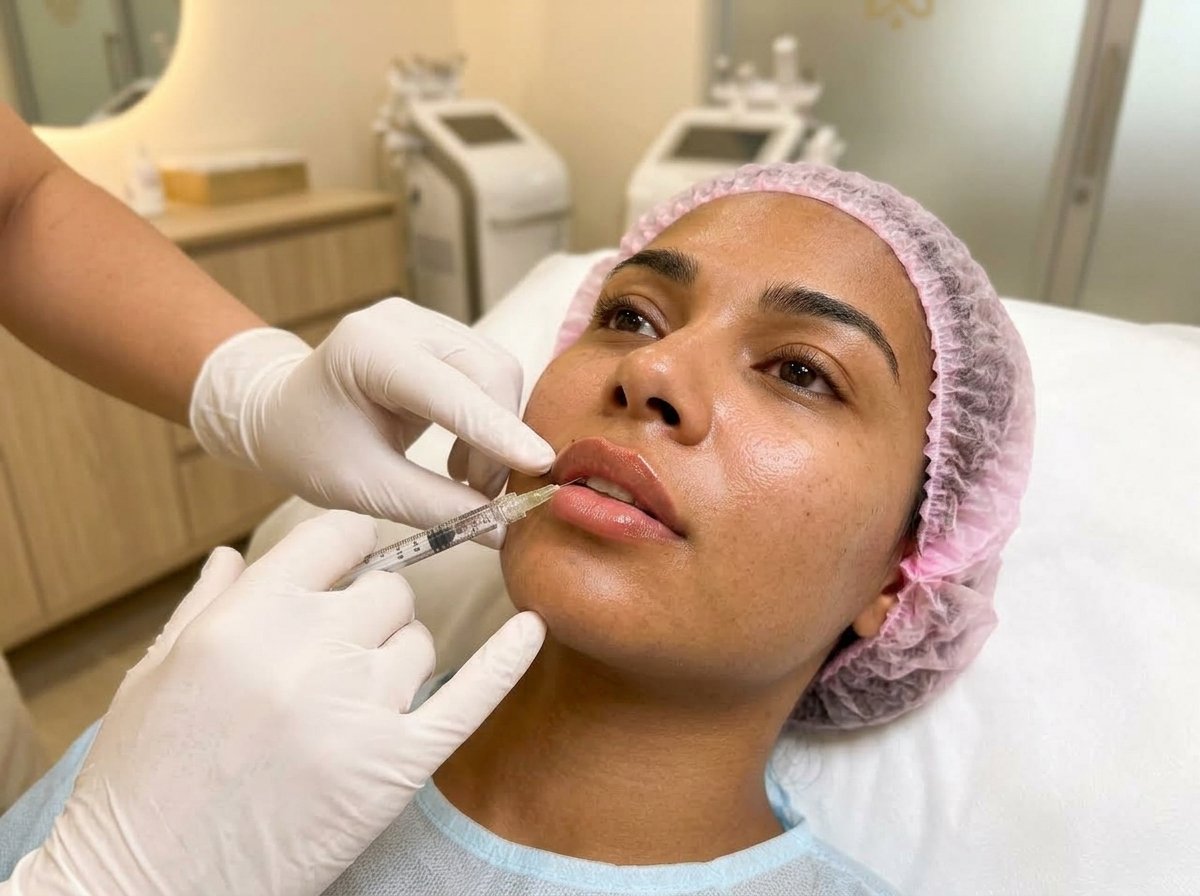
The appointment begins with a detailed consultation and facial assessment. A topical anesthetic is applied before treatment, and in more sensitive areas—particularly the lips—additional local anesthetic may be used. The physician marks the injection sites according to the treatment plan, then introduces the filler using a fine needle or a blunt-tipped cannula, depending on the anatomical depth and the technique appropriate for that area. A full-face filler session typically takes between 30 and 60 minutes. Most patients experience mild swelling and bruising that resolves within three to five days.
Common side effects
Bruising and swelling at the injection sites are the most frequently reported effects and are considered a normal part of the treatment process rather than complications. Tenderness at the treated area for 24 to 48 hours is also common. More significant reactions are rare when treatment is performed by a trained physician using approved products. Vascular complications, though uncommon, are a known risk with any injectable procedure—which is one reason physician training, anatomical knowledge, and access to emergency protocols are non-negotiable considerations when choosing a provider.
If you are considering hyaluronic acid fillers and want an honest, unhurried conversation about what the treatment would involve for your specific anatomy, a consultation is the right starting point. At Redna Aesthetics in Puerto Vallarta, all assessments are private, conducted entirely in English, and free of any pressure to commit to a procedure before you are ready. Visit rednaaesthetics.com to schedule yours.