
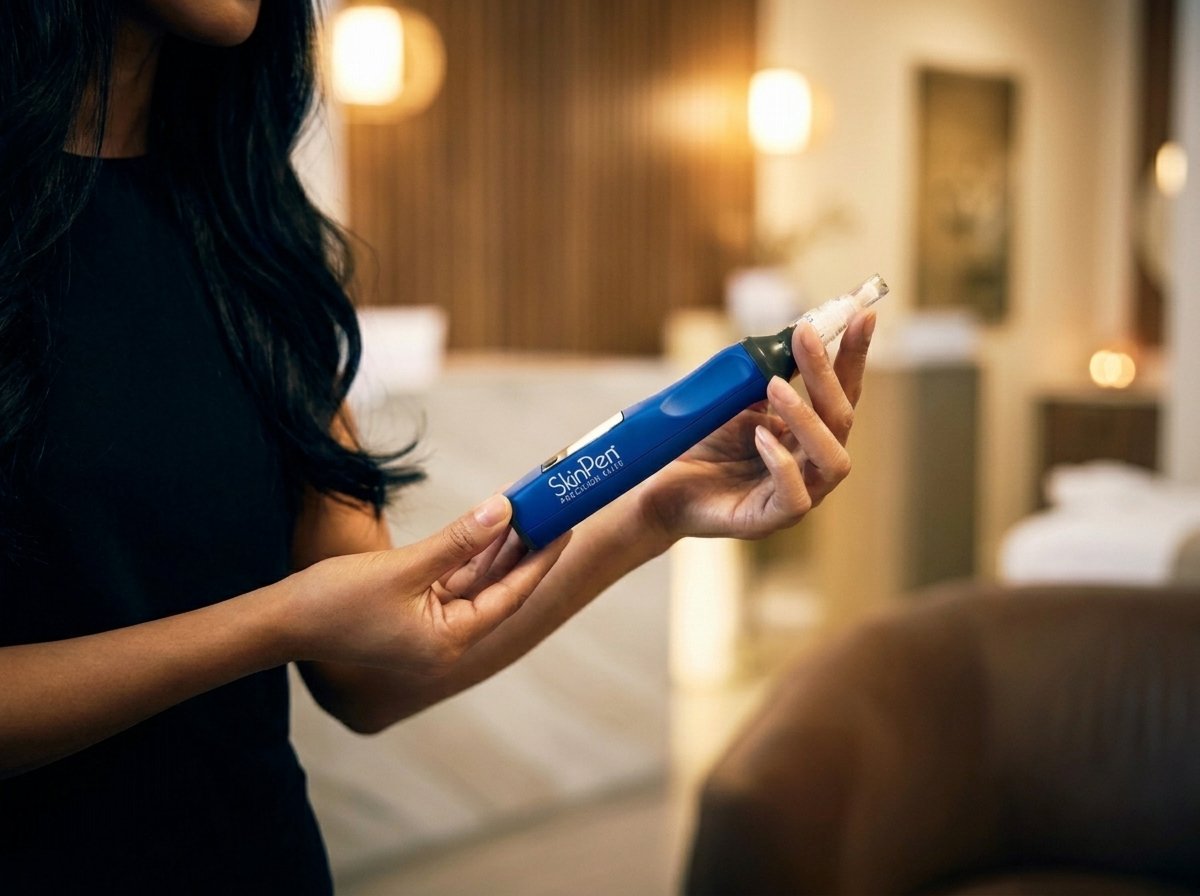
Microneedling is one of those treatments that can be difficult to explain to someone who has never had it. The name alone—needles, deliberately, across the skin—sounds like something to approach with caution. And yet it is one of the most consistently well-tolerated, evidence-backed procedures in medical aesthetics, with a mechanism that is straightforward in its logic: by creating precise, controlled micro-injuries in the skin, it activates the body’s own wound-healing cascade, prompting the production of new collagen and elastin without the introduction of any foreign substance.
The SkinPen is the first microneedling device to receive FDA clearance and remains one of the most rigorously studied tools in collagen induction therapy. Understanding how it works, what it treats, and what to expect before and after a session removes most of the uncertainty patients bring into their first consultation.
Microneedling for the Face with SkinPen: How It Works and What to Expect
The science behind controlled micro-injury
The SkinPen creates thousands of microscopic channels in the skin using a sterile, single-use needle cartridge. The depth of penetration is precisely calibrated by the physician based on the area being treated and the specific concern. Each channel triggers a localized healing response that passes through three overlapping biological phases: inflammation, proliferation, and remodeling. During the remodeling phase, the body lays down new collagen and elastin to repair the micro-channels—gradually thickening and firming the dermal matrix in a way that accumulates over weeks.
The key distinction between clinical microneedling with a device like the SkinPen and at-home dermal rollers is precision, sterility, and depth. Rollers cannot reach the dermal depths required to stimulate meaningful collagen production, and their rolling motion creates inconsistent trauma rather than controlled vertical channels. A clinical device allows the physician to calibrate needle depth exactly to the patient’s skin at each treatment area.
What conditions does microneedling treat?
SkinPen microneedling is clinically indicated for atrophic acne scars, fine lines and surface wrinkles, enlarged pores, uneven skin texture and tone, mild skin laxity, and post-inflammatory hyperpigmentation. It is one of the few aesthetic treatments with robust published evidence for both acne scarring improvement and general skin quality across a range of skin types. Because it works through the body’s own biology rather than through heat or chemical agents, it is generally appropriate for a wider range of skin tones than ablative laser treatments.
What happens during a treatment session
The appointment begins with the application of a topical anesthetic cream, which remains on the skin for approximately 20 to 30 minutes before needling starts. Once the skin is adequately numb, the SkinPen device is moved systematically across the treatment area in multiple directions to ensure even coverage. Most patients describe the sensation during treatment as mild vibration or a light pressure—not pain. A full-face session typically takes between 30 and 45 minutes.
The physician adjusts the needle depth throughout the session depending on the area—the forehead and around the eyes may require a shallower pass than the cheeks or jawline, for example.
What recovery looks like
In the first 24 to 72 hours after treatment, the skin appears red and may feel tight, warm, or mildly sensitive—similar in appearance to a sunburn. This is the expected inflammatory phase and is part of what initiates the collagen response. By days three to four, redness fades significantly, and most patients are comfortable returning to normal activities within two to three days using a gentle moisturizer and mineral SPF as directed.
Active skincare ingredients—retinoids, vitamin C, glycolic acid, and similar actives—should be avoided for at least five days post-treatment. Sun exposure should be minimized throughout the healing window, and makeup should not be applied for the first 24 hours.
How many sessions will you need?
For most skin texture and tone concerns, a series of three sessions spaced four weeks apart is the standard starting protocol. Atrophic acne scarring typically requires additional sessions to achieve meaningful improvement. Because the collagen response builds cumulatively, the most noticeable improvement generally occurs after the second or third session rather than the first—a timeline that should be set as an expectation from the beginning.
After the initial series, maintenance treatments every four to six months sustain the collagen response and preserve the results over time.
Who is a good candidate?
SkinPen microneedling is appropriate for adults who want to improve skin texture, reduce the appearance of scars, or address early signs of aging without the recovery period associated with laser resurfacing or medium-depth chemical peels. It is not recommended during active acne breakouts, over actively inflamed skin, or in patients with certain wound-healing or clotting disorders. A physician consultation establishes candidacy and allows for a treatment plan tailored to the patient’s skin condition and goals.
If you are considering SkinPen microneedling and want to understand what a personalized treatment plan would look like for your skin, the conversation begins with a consultation. At Redna Aesthetics in Puerto Vallarta, all procedures are performed by a certified physician in English, in a private clinical setting. Visit rednaaesthetics.com to schedule your appointment.